




























Why Digital Depictions of Coral Reefs Rarely Capture Their True Complexity
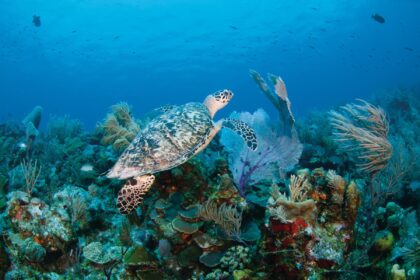
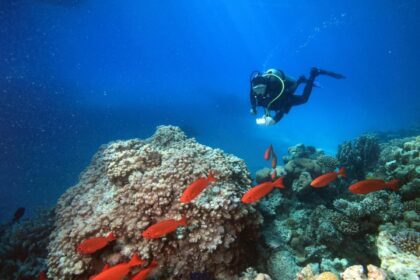
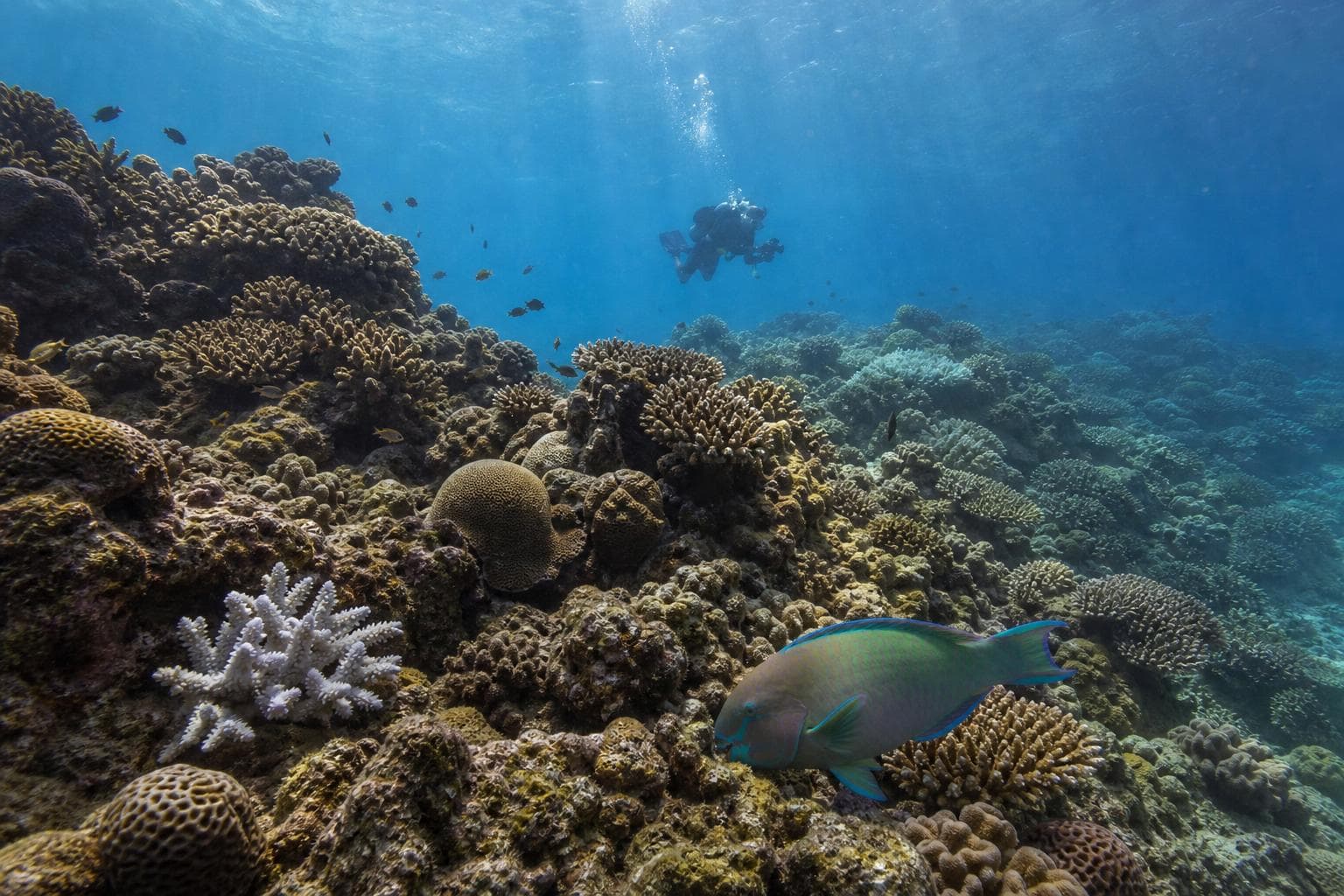
Watch a parrotfish feeding and its colours soon become only part of the attraction. As it scrapes material from the reef, the fish helps shape the surface where corals and other organisms live. Each bite connects it to the condition of its surroundings.
On screen, the fish’s appearance is easier to convey than the consequences of its feeding. The same challenge runs through digital reef imagery: capturing what an ecosystem looks like involves different choices from showing how it works.
A Reef Arranged for the Screen
Aquarium screensavers, animated films and ocean-themed online slots use reef imagery for different purposes. In a screensaver, viewers can arrange the scene themselves. SereneScreen’s Marine Aquarium allows users to select fish and adjust aspects of the display.
Film-makers make their own selections. Pixar’s production account describes how early reef tests for Finding Nemo looked so realistic that the team deliberately increased stylisation. When making Finding Dory, set-dressing artists built the reef from a wide variety of coral, rock and plant models, then adjusted the scenery shot by shot to lead the viewer’s eye.
The detail serves a carefully composed picture. Following the animals’ activities takes the viewer into a more complicated account of feeding, growth and competition.
The Work Behind the Colours
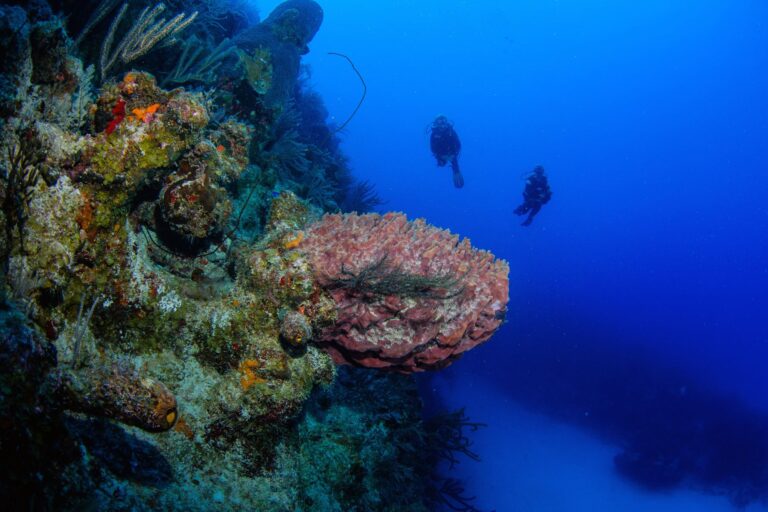
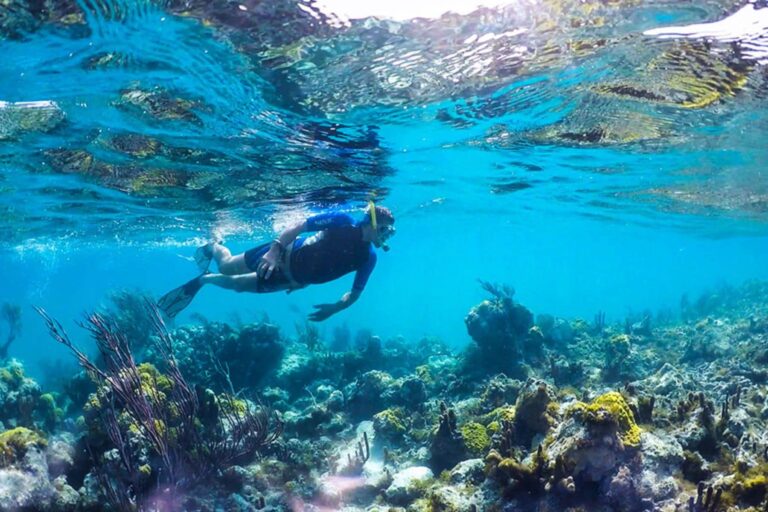
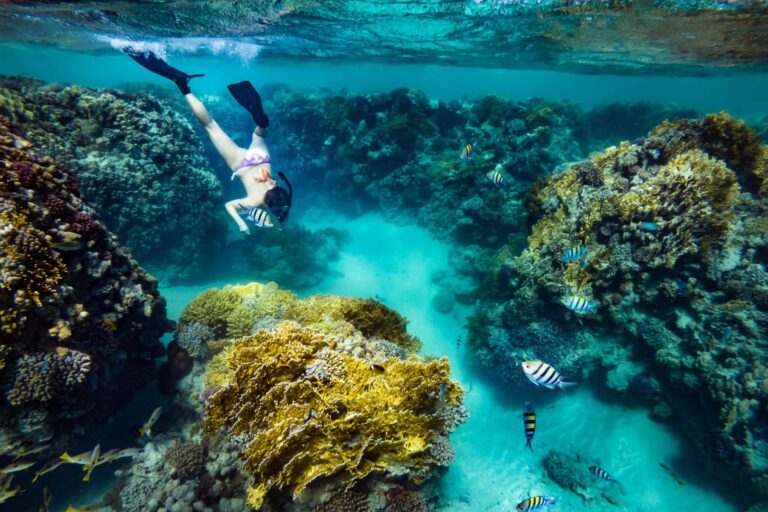
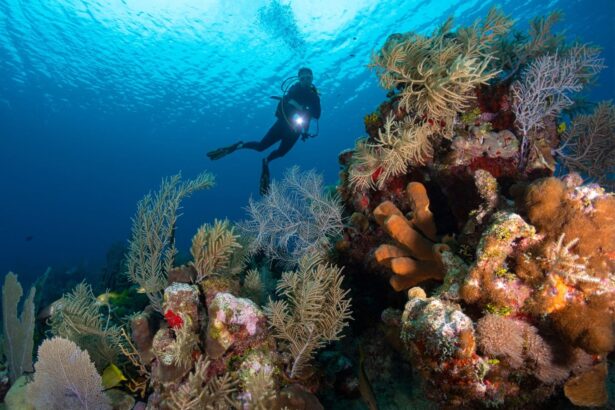
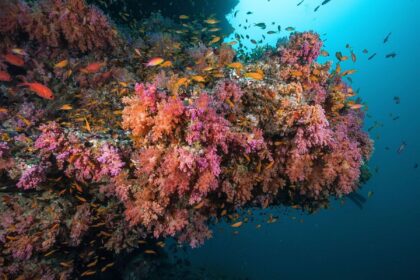
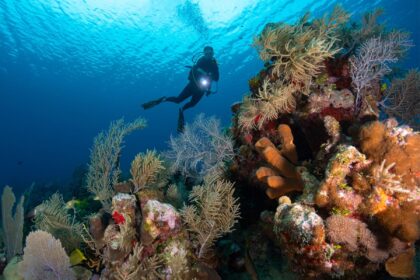
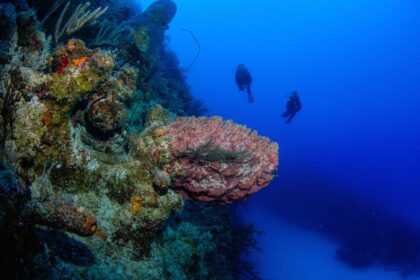
A close look at a coral colony reveals individual animals called polyps. In stony corals, these animals secrete calcium carbonate skeletons. Over generations, their growth contributes to the reef’s framework.
Many shallow-water reef-building corals also contain microscopic algae that use sunlight to produce food. The coral receives products of photosynthesis; the algae gain shelter and nutrients. The colony a diver sees depends on this partnership within its tissues.
Around it, grazing fish browse seaweeds, scrape surfaces and remove accumulated organic material. Coral neighbours compete for space, sometimes extending filaments that damage adjacent tissue.
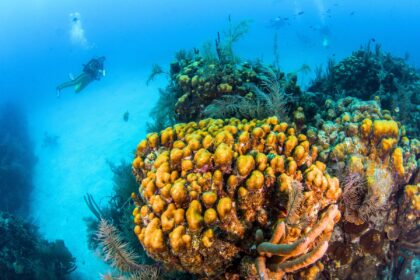
Sponges participate in less conspicuous exchanges. In a 2013 Science study, researchers traced dissolved organic matter through sponges into shed cellular material that other reef animals consumed. Following that food through the ecosystem gives a sponge a role beyond the shape it adds to the scene.
A Different Reef After Dark
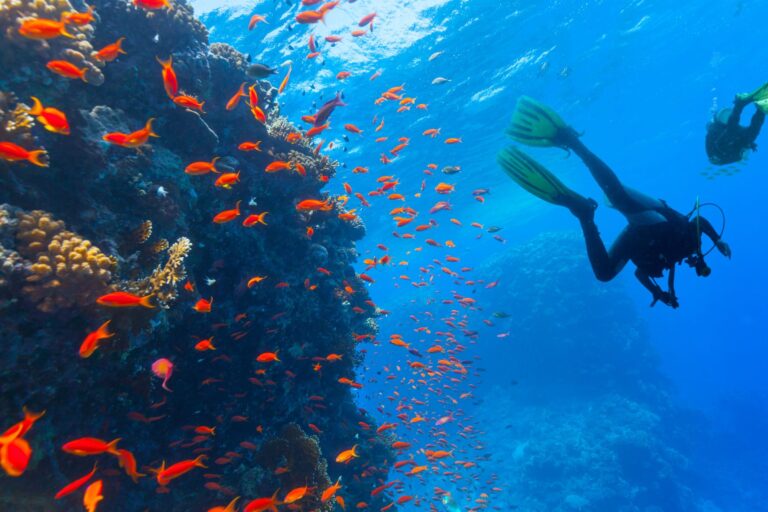
Time changes what a diver can observe. Many coral polyps extend their feeding tentacles at night, while animals sheltering in crevices and beneath ledges follow their own patterns of activity.
A return after sunset can therefore reveal behaviour that was hidden during an afternoon visit. Across the year, reproductive cycles bring further changes.
Broadcast-spawning corals release eggs and sperm into the water, often in synchronised events. Seasonal temperature, daylight and lunar cycles help determine when this happens. The reef’s inhabitants respond to overlapping environmental signals, with feeding visible over minutes and reproductive patterns unfolding across months.
A digital reef may be full of movement. Showing those longer schedules requires the scene itself to change, carrying the viewer beyond one attractive underwater moment.
When Colour Signals Stress
Light also changes the colours a diver sees. Water absorbs warm colours relatively quickly, while blue light penetrates farther; clear ocean water and coastal water transmit light to different depths.
Changes in environmental conditions can disrupt the partnership between coral and algae. During bleaching, corals lose microscopic algae from their tissues, becoming pale or white and losing a major source of food. They can recover when conditions improve. Prolonged stress increases the risk of death.
In a June 2026 update, NOAA reported that bleaching-level heat stress had affected 84% of the world’s coral reef area between early 2023 and mid-2025.
Some stressed corals become intensely colourful. Research published in Current Biology in 2020 showed how the loss of algal partners can trigger the production of vivid protective pigments. Those colours belong to the coral’s response to stress, giving a striking surface appearance a different significance.
What Repeated Visits Reveal
Researchers off Maui used overlapping underwater photographs to build detailed three-dimensional models of the same reef sites over time. Their 2024 study followed 1,832 coral colonies from 2014 to 2021, including bleaching events in 2015 and 2019.
Across that period, Pocillopora had the lowest survival of the corals monitored, while Porites lobata proved far more resilient. Individual colonies followed different paths within the same reef environment.
Here, digital imagery helps people follow growth, bleaching, survival and death. The method gives each colony a history.
That is also what rewards a diver’s attention: the chance to connect an animal’s behaviour with its surroundings, then return and see what has changed. The parrotfish’s bites become part of an unfolding account of the reef.