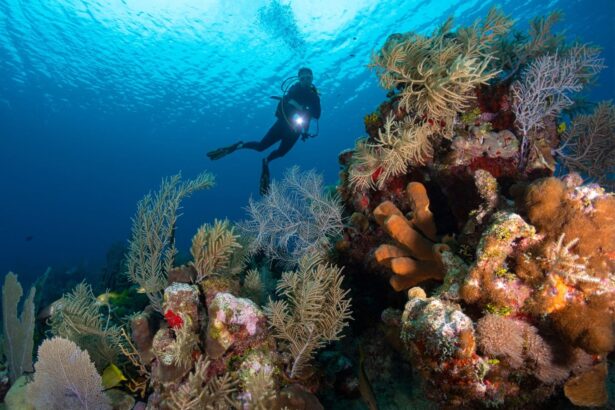






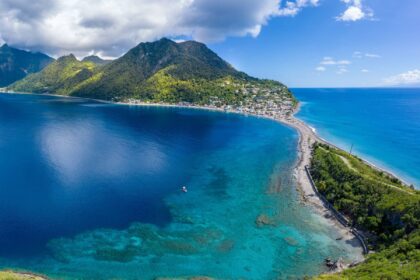
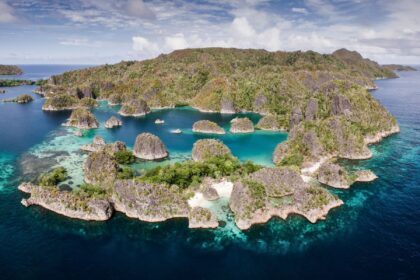
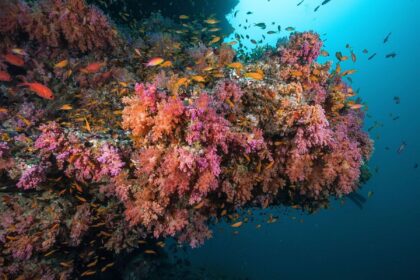
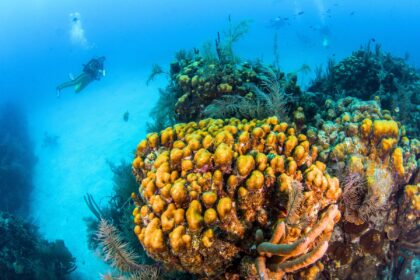
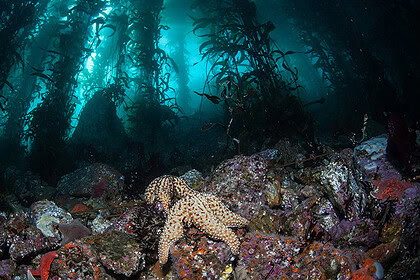
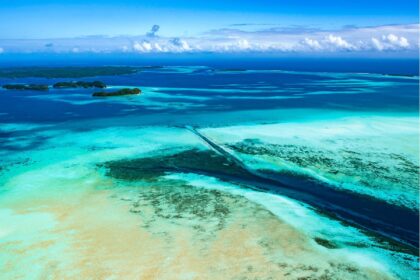
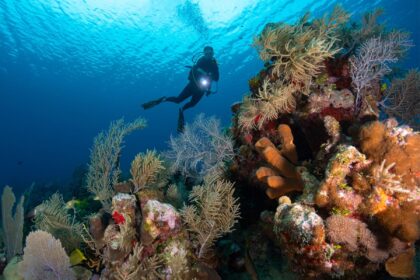


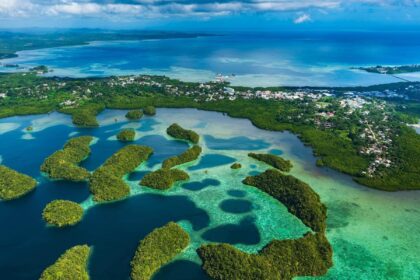
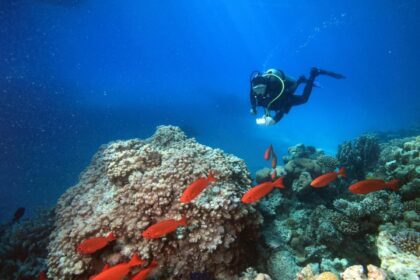










Diving in the Bay Islands centers on Roatán, Utila, and Guanaja. You’ll get classic Caribbean walls, healthy sponges, easy moorings, and short boat rides from day-boat hubs. Beginners love the shallow reefs; advanced divers chase deeper walls, wrecks, and faster drifts at the points and pinnacles.
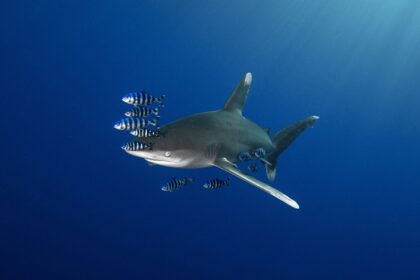
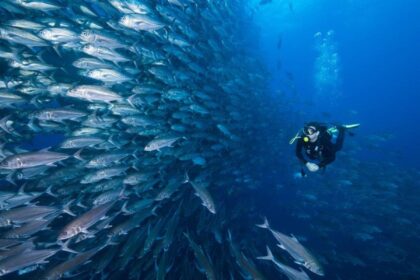
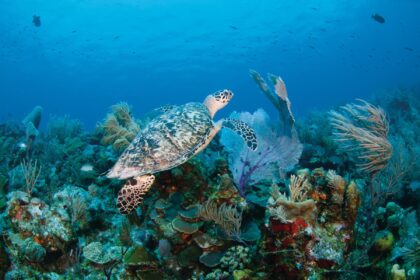
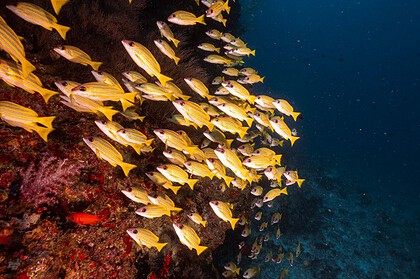
Expect busy reefs with turtles, southern stingrays, and eagle rays cruising past giant barrel sponges. On the walls you’ll see schools of chub, jacks, and barracuda, with reef sharks and the occasional pod of dolphins when currents run.
Macro fans can hunt for seahorses, drums, sailfin blennies, and flamingo tongue cowries in the shallows. And yes—Utila offers a real (but never guaranteed) shot at whale sharks, especially in spring and again later in the year when baitfish gather.
What makes diving in the Bay Islands special?
Roatán, Utila, and Guanaja sit on the Mesoamerican Barrier Reef, the largest barrier reef in the Western Hemisphere, so expect some spectacular wall dives. That geography means the islands deliver steep drop-offs, crevasses, and giant sponges within minutes of the dock.
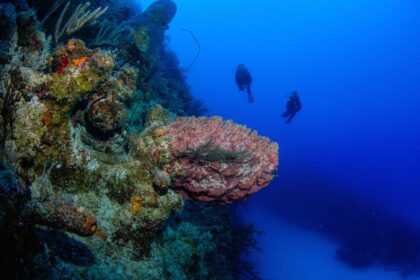
Roatán is the all-rounder, with quick boat rides to north- and west-side walls, plus a sheltered south side when “northers” blow. Expect huge sponges, hawksbill turtles, friendly groupers, and easy drifts at the points. Night dives often deliver octopus and squid, and the shallow reefs make long, relaxed profiles simple.
Utila’s deeper water sits close to shore, and seasonal plankton and baitfish can attract whale sharks along the island’s north side. Operators scan for bird action and jump lines when conditions line up. It’s never a sure thing, but this is one of the Caribbean’s better bets.
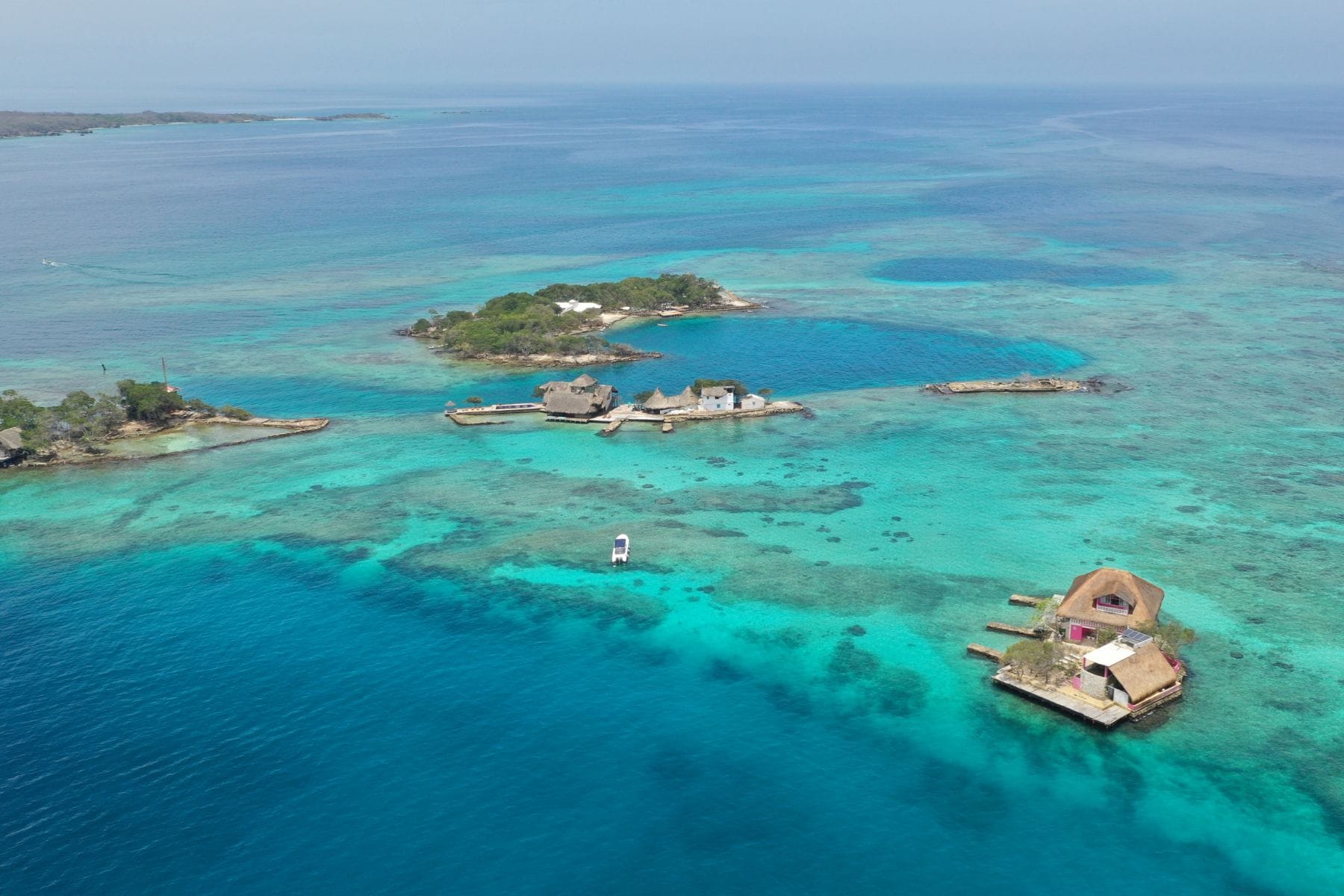
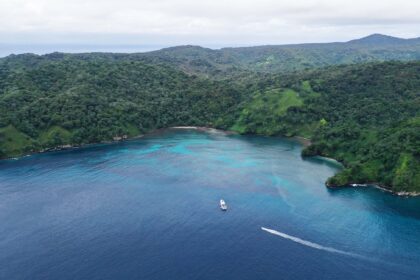
Guanaja is quieter and less developed. Its pinnacles and boulder mazes feel wild, with clear water and fewer boats. If you like small groups and boutique lodges on their own cays, this island fits.
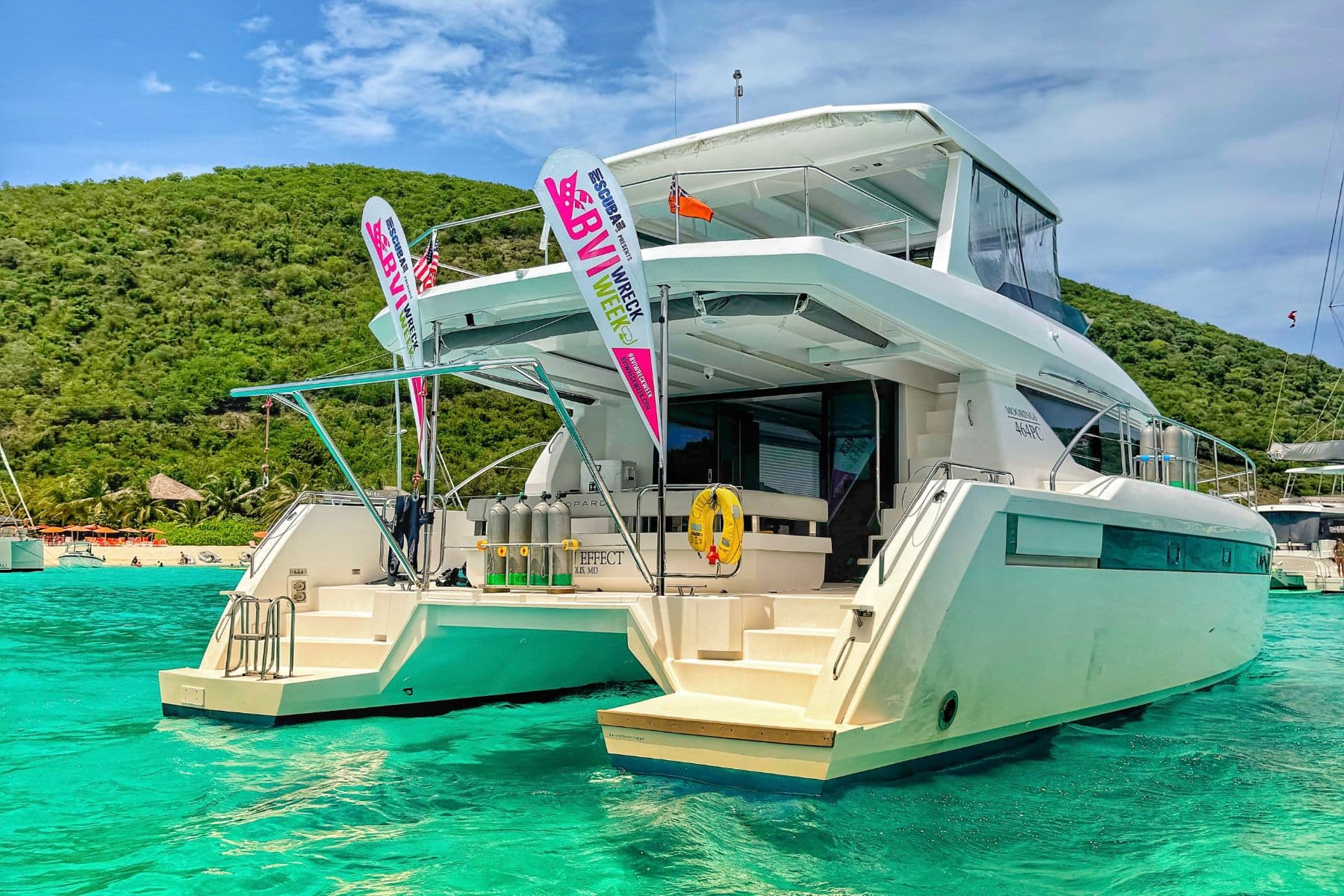
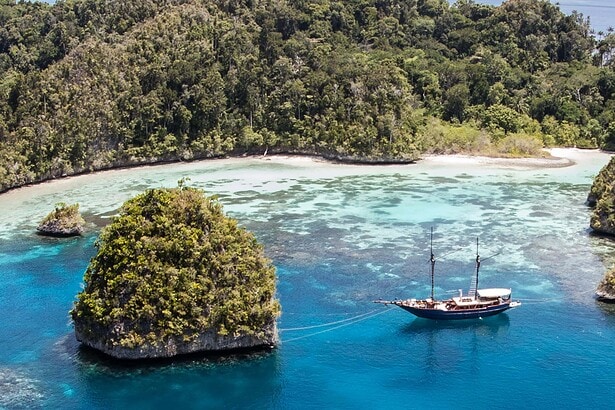
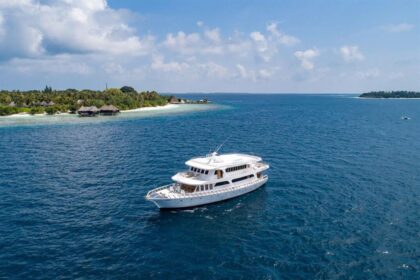
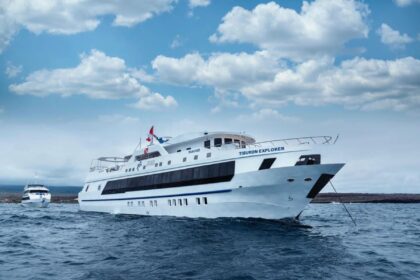
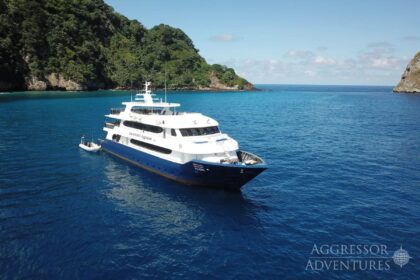
Liveaboards add another way to connect the islands in one trip, with weeklong loops that sample Roatán, Utila, and seamounts when conditions allow. Day-boats remain the norm, but there is at least one liveaboard operating in the Bay Islands.
Best time to dive in the Bay Islands
Roatán (north & west coasts)
- Best March–July for calm seas, 80–86 F (27–30 C) water, and visibility that often tops 100 feet/30 m. October–January brings the rainy season and “northers,” so visibility can dip toward ~40–60 feet/12–18 m and some north-side sites close, but shops shift leeward.
Utila
- Year-round diving with peak sea conditions and viz in March–May; water 79–84 F (26–29 C). A secondary window from late summer into early fall can be good too. Whale shark chances are highest from March to May and October to December when there are baitballs in the water.
Guanaja
- Conditions here are similar to Roatán. April–September is typically calm with 80–86 F (27–30 C) water and 60–100 foot (18–30 m) viz. Winter “northers” push diving to the south side until seas settle.
Bottom line: Plan for March–June if you want the most stable seas and best odds of top visibility across all three islands.
Top 7 dive sites in the Bay Islands
Mary’s Place (Roatán, South Side)

From resorts near French Harbour/Cocoview, you’ll moor and drop along the wall, then enter a dramatic crack at ~70–90 feet (21–27 m). The route weaves through narrow fissures before you exit onto the outer wall and drift along the reef crest for your ascent.
What you’ll see at Mary’s Place
Expect towering black coral, overhangs with glassy sweepers, and sponge-lined walls. Turtles and groupers cruise the face, and macro hunters work the ledges around 60–100 feet (18–30 m).
El Aguila wreck (Roatán, Sandy Bay/North Side)


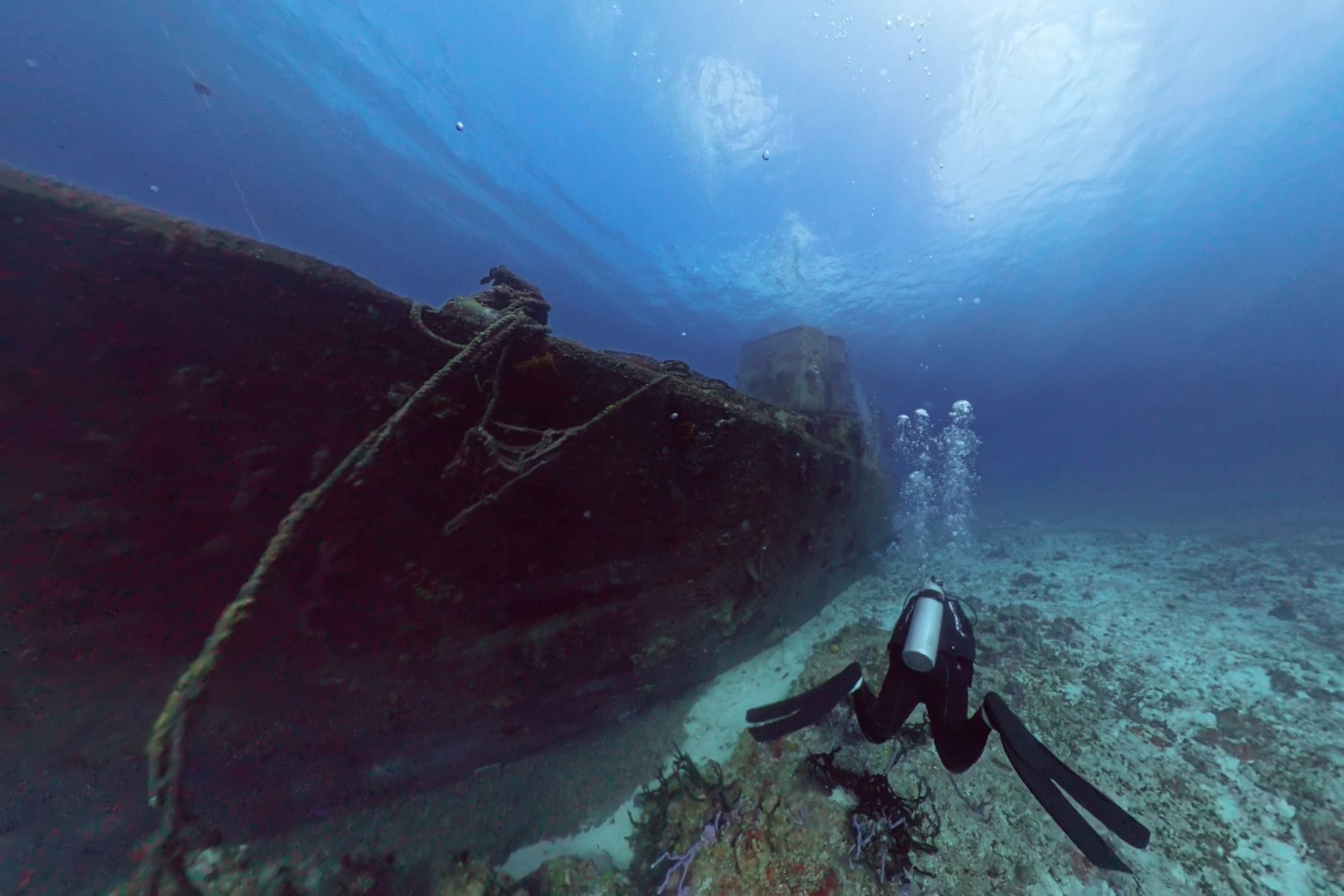
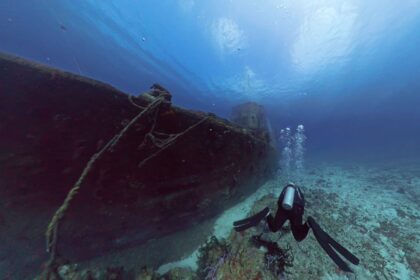
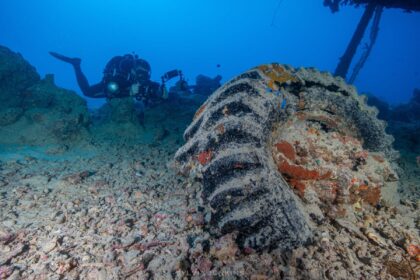
Follow the mooring line to the superstructure, then do a slow loop around this ~230-foot (70 m) freighter. The sandy bottom is at around 110 feet (34 m) with the top decks near 65 feet (20 m). Finish on the adjacent reef for your safety stop.
What you’ll see at El Aguila wreck
Schools of horse-eye jacks, big barrel sponges, and frequent turtles are all present on the wreck. Visibility often sits at 60–100 feet (18–30 m); currents mild to moderate.
West End Wall/Texas (Roatán, West Point)


Back-roll near the point and descend along the edge of the wall at 20–40 feet (6–12 m). Follow the wall to ~60–90 feet (18–27 m) as the drift builds toward “Texas”—the flat, current-swept plateau at the corner. The boat picks you up where the current eases.
What you’ll see at West End Wall/Texas
This dive features huge sponges, schooling chub and snapper, and regular eagle ray fly-bys on days with a lot of current. Expect medium to strong flow near the point and plan your depth to match your NDLs.
Black Hills (Utila, south of town)


This is one for the experienced divers. Typically a free-mooring, blue-water descent, you’ll reach the top of the seamount at ~40–50 feet (12–15 m). Orbit the wall at 60–100 feet (18–30 m), watching the current and making a blue-water ascent back to the boat’s shot line.
What you’ll see at Black Hills
Thick schools of creole wrasse and jacks, hunting bar jacks and horse-eyes, and frequent eagle rays. The site’s pulsing current at around 40–50 ft (12–15 m) and open-water descent and ascent make it best for practiced divers.
Halliburton wreck (Utila, near town)


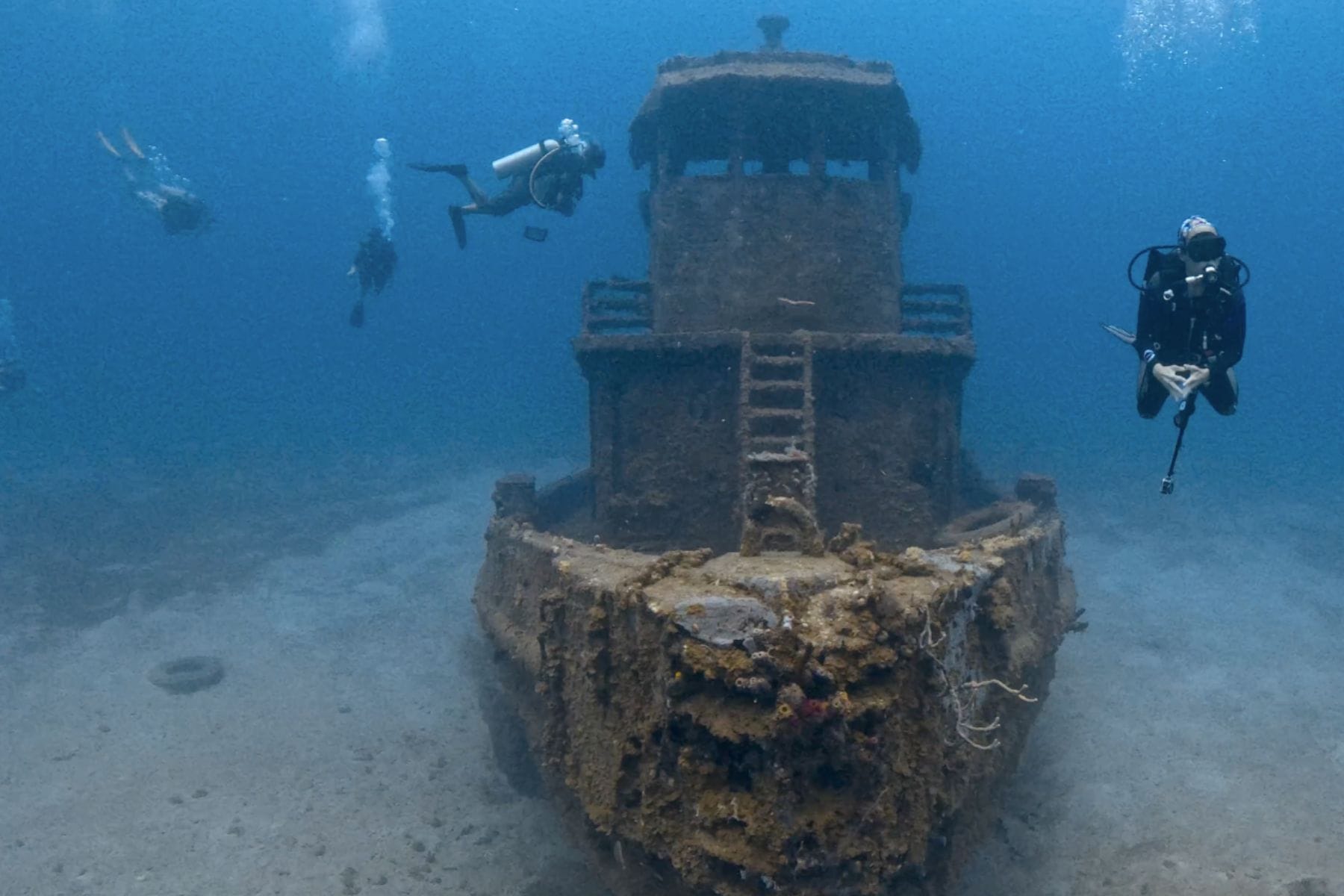
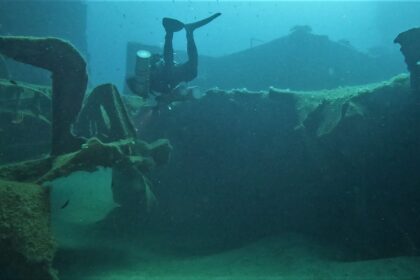
From East Harbour it’s a quick 3–5 minute ride to the Halliburton, a 100-foot (30 m) cargo ship purpose-sunk in 1998 as an artificial reef. The wreck sits upright on the sand at ~100 feet (30 m), with the main deck around ~85 feet (26 m) and the top of the bridge near 65–70 feet (20–21 m). Drop on the mooring line, loop the superstructure, then finish with a safety stop on the adjacent reef.
What you’ll see at Halliburton wreck
Expect encrusting sponges, arrow crabs, and resident morays, with barracuda circling overhead. Divers can make simple, daylight swim-throughs of the wheelhouse and cargo areas where prepared, but full penetration is for those with training. Great for Advanced/Deep courses and nitrox practice.
Michael’s Rock (Guanaja, north side)


This rocky point rises above the surface—underwater it becomes a fringing reef cut by canyons and low swim-throughs. You’ll descend onto the reef around 45–60 feet (14–18 m), follow the cracks as they wrap around the point, and work your way up the wall and sandy fingers before returning to the mooring, with typical maximum depths near 80 feet (21–24 m).
What you’ll see at Michael’s Rock
Soft coral gardens sway, schools of chub circle, and macro life hides within the shady cracks. Conditions are usually calm with excellent visibility when the north is settled.
The Pinnacle (Guanaja, offshore)


Boats usually tie to a mooring when conditions are calm; if it’s exposed or occupied, crews may do a live-boat drop and pickup. Descend to the top of the pinnacle at about 30 feet (9 m), then circle it between 60 and 90 feet (18–27 m) while staying mid-water because the wall drops beyond 100–135 feet (30–41 m). Finish shallow on the reef for your safety stop before signaling for pickup.
What you’ll see at the Pinnacle
Expect barrel sponges, sea fans, and wire corals with horse-eyes and barracuda patrolling the edges. Eagle rays often appear in the blue, and Caribbean reef sharks sometimes glide by. On calm days visibility can stretch past 100 feet (30 m).
How to get to and around the Bay Islands
Airports & entry
Roatán’s Juan Manuel Gálvez International (RTB) is the main international gateway to the Bay Islands. Divers staying in West End/West Bay can expect a taxi ride of about 30 minutes to their hotels. Utila (UII) and Guanaja (GJA) are small airstrips reachable by charter flights and some domestic flights from La Ceiba (LCE) and San Pedro Sula (SAP).
Ferries
Two operators handle nearly all crossings. Galaxy Wave runs La Ceiba–Roatán (about 1 hour 20–30 minutes) and also operates Roatán–Guanaja on set days, with La Ceiba–Guanaja typically routed via Roatán.
Dream Ferries (“Utila Dream”) runs La Ceiba–Utila (about 45–60 minutes) and a daily Roatán–Utila link (about 1 hour). Schedules can shift with weather and season—especially during winter “northers”—so confirm close to travel.
Getting around
Roatán
A paved main road spans the island. Allow 20 to 30 minutes to get from the airport to West End and 30 to 40 to get to West Bay. Traffic slows when cruise ships are in. West End has limited street parking but there’s a pay lot near the village if your accommodation doesn’t offer parking. Water taxis run between West End and West Bay and the trip takes about 10 minutes.
Utila
The ferry lands at the Municipal Dock in Utila Town (East Harbour), and most lodging is only five or 10 minutes away. You’ll use tuk-tuks, golf carts, bikes, and water taxis to get around. Boat rides to Water Cay take 20–30 minutes depending on conditions.
Guanaja
Expect dive centers to pick you up via boat to get to dive sites; many lodges sit on private cays with their own docks and gear rooms.
Regional hubs & transfers
- West End/West Bay (Roatán): Fly into Roatán (RTB) and transfer 20–30 minutes to West End or about 30–40 minutes to West Bay. Day boats typically run two-tank mornings with most sites 5–20 minutes from the dock. Traffic backs up on cruise days, so build a little buffer into airport runs.
- Utila Town/East Harbour (Utila): Utila Town is the island’s dive hub—most shops and lodging sit along the main waterfront, so check-ins and boat load-ups are easy on foot. Day boats typically depart from shop docks or the municipal pier for two-tank mornings. If you’re staying on the cays, plan short water-taxi hops to meet morning departures and to get back after night dives.
- Guanaja (lodge-based): The simplest access to Guanaja is via a short domestic flight from La Ceiba, with resort boats handling all transfers on arrival. Many lodges sit on small cays, so expect short boat rides to sites, rinse tanks at the dock, and secure gear storage on property. Ferry links are less frequent here than Roatán or Utila, and crossings are more weather-dependent.
Where to stay in the Bay Islands
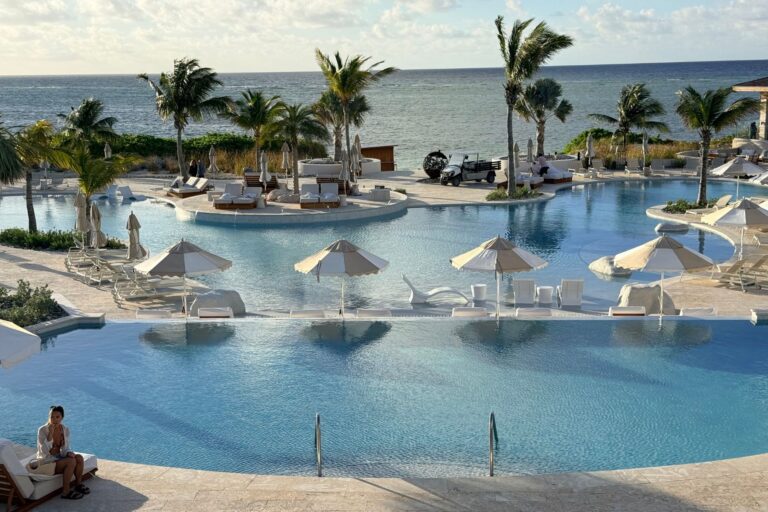
Roatán (West End/West Bay/Sandy Bay): Look for places with on-site docks, gear lockers, shaded drying, and early breakfasts timed to two-tank departures. West End puts you 5–10 minutes from most boats; West Bay adds wide beaches and quick drops onto the reef.
Utila (East Harbour & the Cays): Many inns and dive lodges cluster near the ferry with easy walk-ups to the boats. Ask about secure storage, rinse tanks, and nitrox availability. Water-access properties often use small skiffs—expect wet boardings.
Guanaja (boutique lodge cays). Most resorts occupy private cays. Think small guest counts, private docks, and staff-handled cylinders. Most packages include boat transfers, gear storage, and short site runs to keep days relaxed.
Final thoughts on diving in the Bay Islands
If you want a lively hub with wrecks, walls, and easy logistics, base yourself in Roatán. If your dream is a small-island vibe and affordability—with real whale shark potential—opt for Utila. If you prefer quiet reefs and boutique lodges, go to Guanaja.
The honest caveat: winter “northers” can shut exposed sites; whale sharks are never guaranteed; and island transfers depend on ferries and small planes. But plan for the right season and keep a flexible day-by-day mindset, and you’ll find some of the Caribbean’s most rewarding wall diving.